
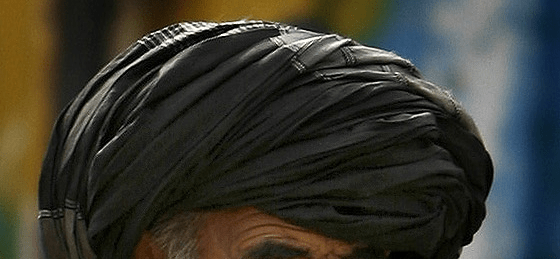
I couldn’t miss the massive tribal turban on his head and the rifle hanging from his shoulder. I had noticed a man waving at me while I was waiting for an appointment on Peshawar university’s sparse front lawn. He had been in the shadow of a tree so I couldn’t make him out clearly. More waving followed and eventually he came into the sunlight. This concentrated my mind. He got nearer, speaking quietly.
I stood my ground and sweated. As he came to my personal space, he gave up talking and reverted to sign language, which he was good at. He had taken pity on me standing out there in the hot sun and wanted me to enjoy the shade of the trees before I keeled over with dehydration. He was a security guy for the university. The intricately patterned turban was a normal, distinctive, proud tribal sign – like a surname.
It was time for me to eat humble pie, biting off great chunks of cross-cultural learning. We had come to Peshawar, the capital of Pakistan’s north-westerly province, to research the possibility of working there as missionaries with the local Pathan people (I obviously had a long way to go). Suitably chastened, it was now my turn to see Dr Sattar, head of chemistry, who told me that they taught ‘some elementary microbiology’ – my old speciality from Trinity College. I offered to teach it (the blood must have gone to my head). ‘How many hours a week?’ he asked. (The blood must have gone to his head too.)
What was intended to be another piece of research turned out to be a special treat when we were given an introduction to visit the local Presentation nuns, most of whom were from Cavan and universally respected in the city. From the inside there was little to indicate that this convent wasn’t in Fermoy, Athlone or Clonmel. We had tea (with adroitly reconstituted Irish powdered milk) and talked for an hour and a half with Sister Monica who had worked in Peshawar for 45 years. Surely one of the ‘grand old ladies’ of Irish missions, she spoke with verve and enthusiasm about her ‘pre-evangelization’ work in the local school and commented hopefully and without batting an eyelid, ‘I expect these people to turn back to Christianity in two hundred years.’
It was refreshing to meet someone with such a sense of history who sees herself as a person of destiny and who could work with contentment towards a goal beyond her own lifetime – in her case 2181 AD. I don’t know many people who even think like that.
Before we left Peshawar, there was one piece of business left – to get the tourist experience of the Khyber Pass. A group of us hired a taxi which roared up that iconic road to the bristling border post with Afghanistan. The driver had enough well-practised English to show us the various spots in the Pass where one or another British regiment was wiped out by Pathan fighters during the nineteenth century Anglo-Afghan wars. Pathan respect for the British army remained high. I think they respected them for trying. The driver kept the car radio on. On the way back down, it was playing the Beatles’ Hey Jude.
Our heads were spinning for more reasons than one – we had just spent Easter Sunday in the Khyber Pass.
See The Electrician’s Children for the rest of the story!
 the electrician's children